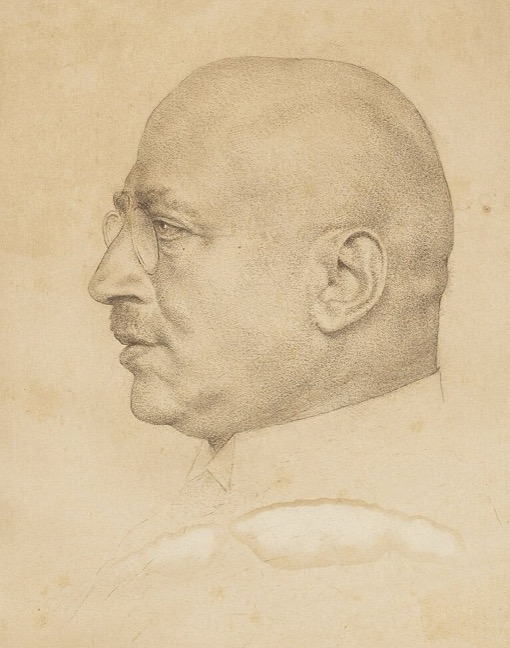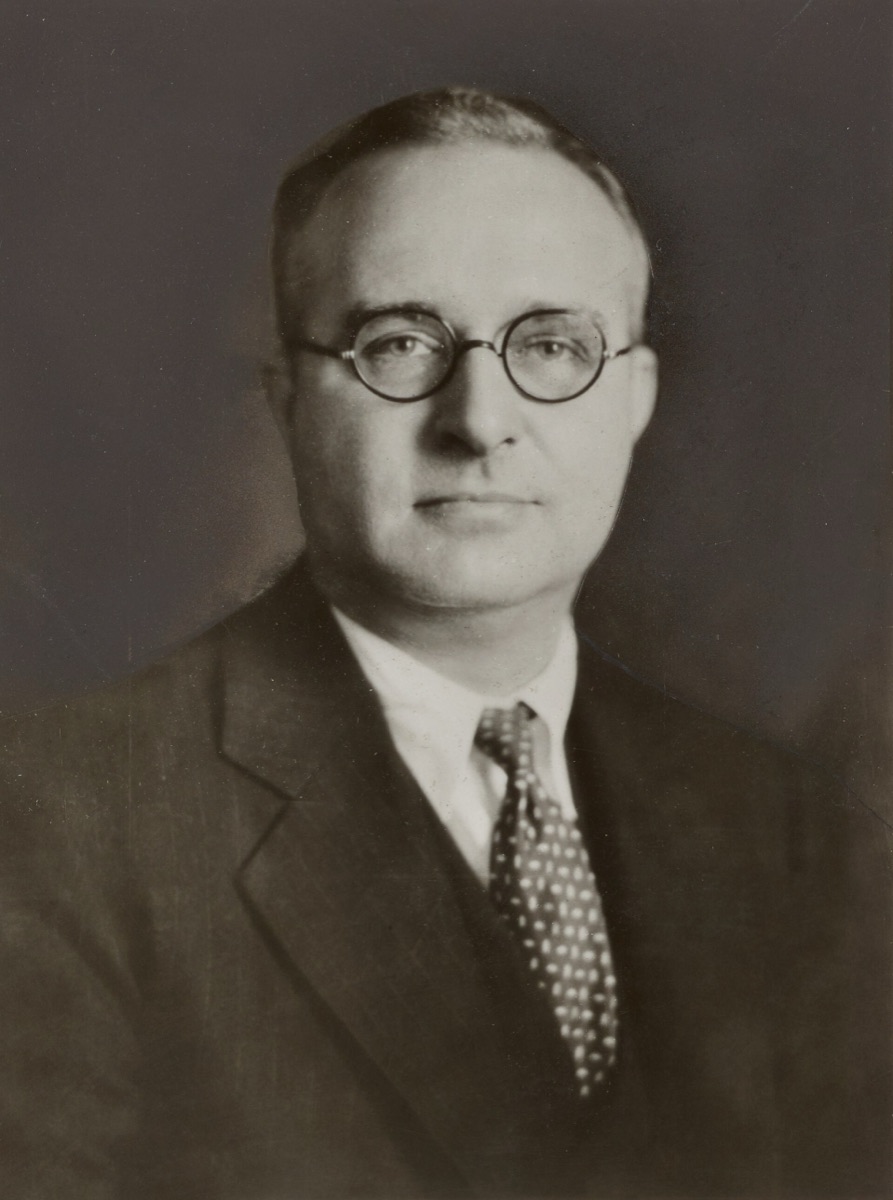
Thomas Midgley Jr.
1889 to 1944
Chemistry and Materials
Two fixes, one long cleanup
In the 1920s one engineer solved two of the decade's big problems. The world spent most of a century cleaning up after both.
How to read the tile
Chemistry and Materials. The color matches.
Midgley was born in 1889.
The first two letters of the name.
The surname, or the short name of a program.
About a billion people (estimate).
About 100 million people (estimate).
01 What it was meant to do
Stop engines knocking and fridges leaking poison
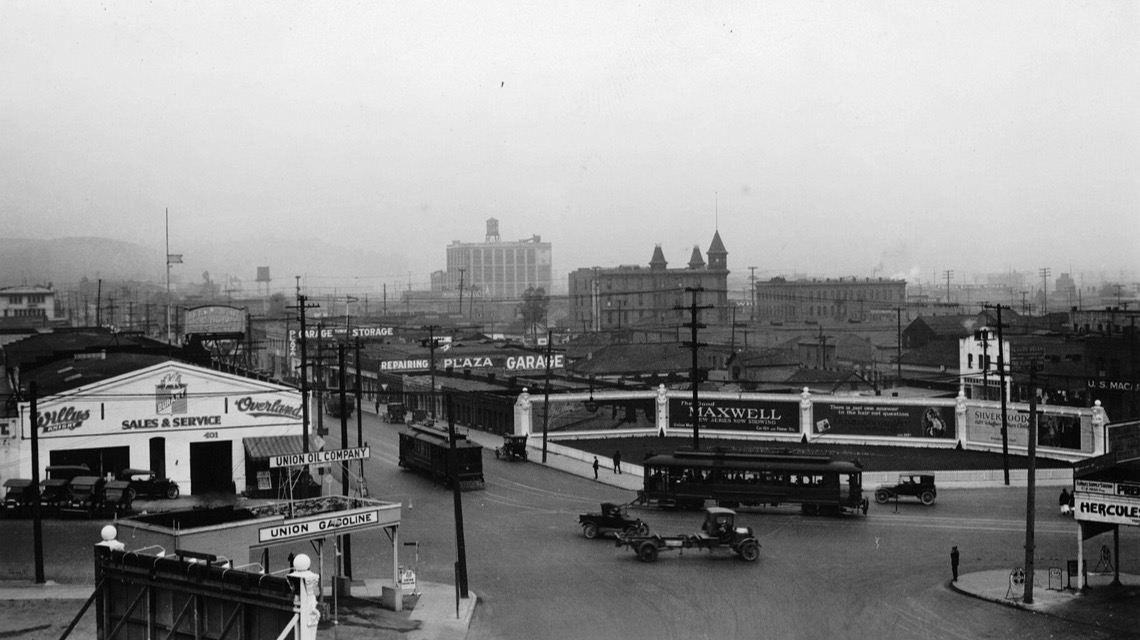
Early car engines knocked: the fuel burned unevenly, wore out parts and wasted power. Home refrigerators used ammonia or sulfur dioxide, and a leak could kill the family in the kitchen.
02 What went right
Both worked
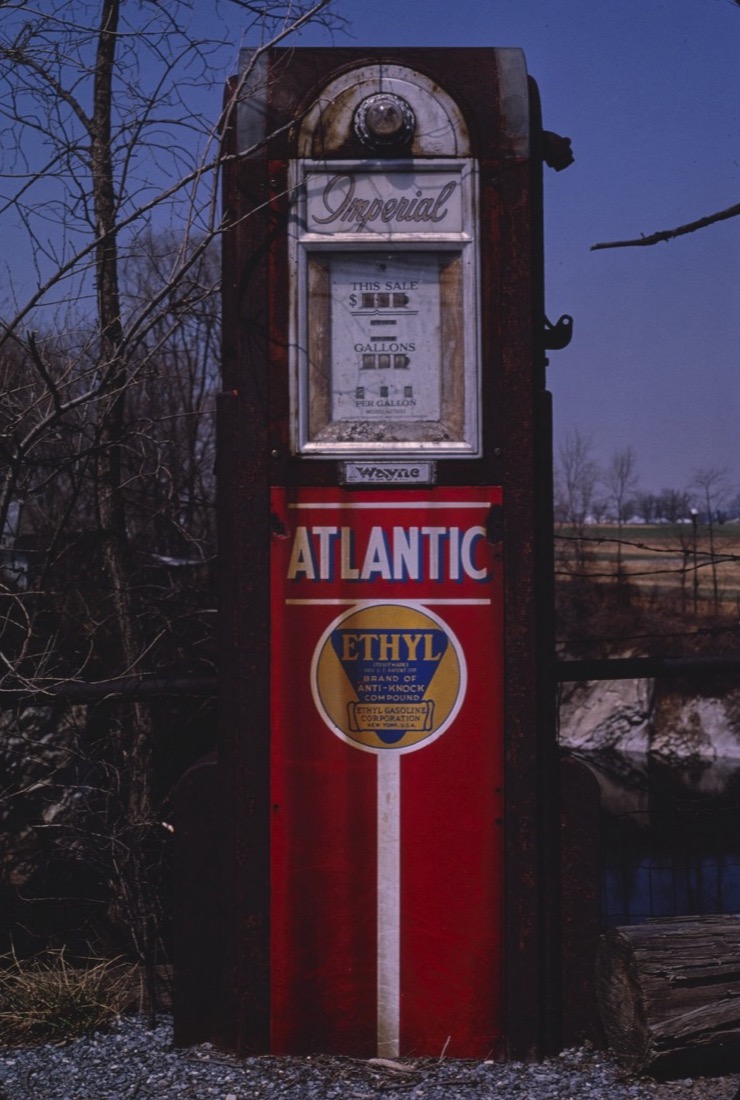
In 1921 Thomas Midgley found that a little tetraethyl lead in gasoline stopped the knock. In 1928 he made chlorofluorocarbons, sold as Freon: no fire, no poison. Cars got more powerful and fridges became safe to own.
03 What went oops
Lead in the air, a hole in the sky
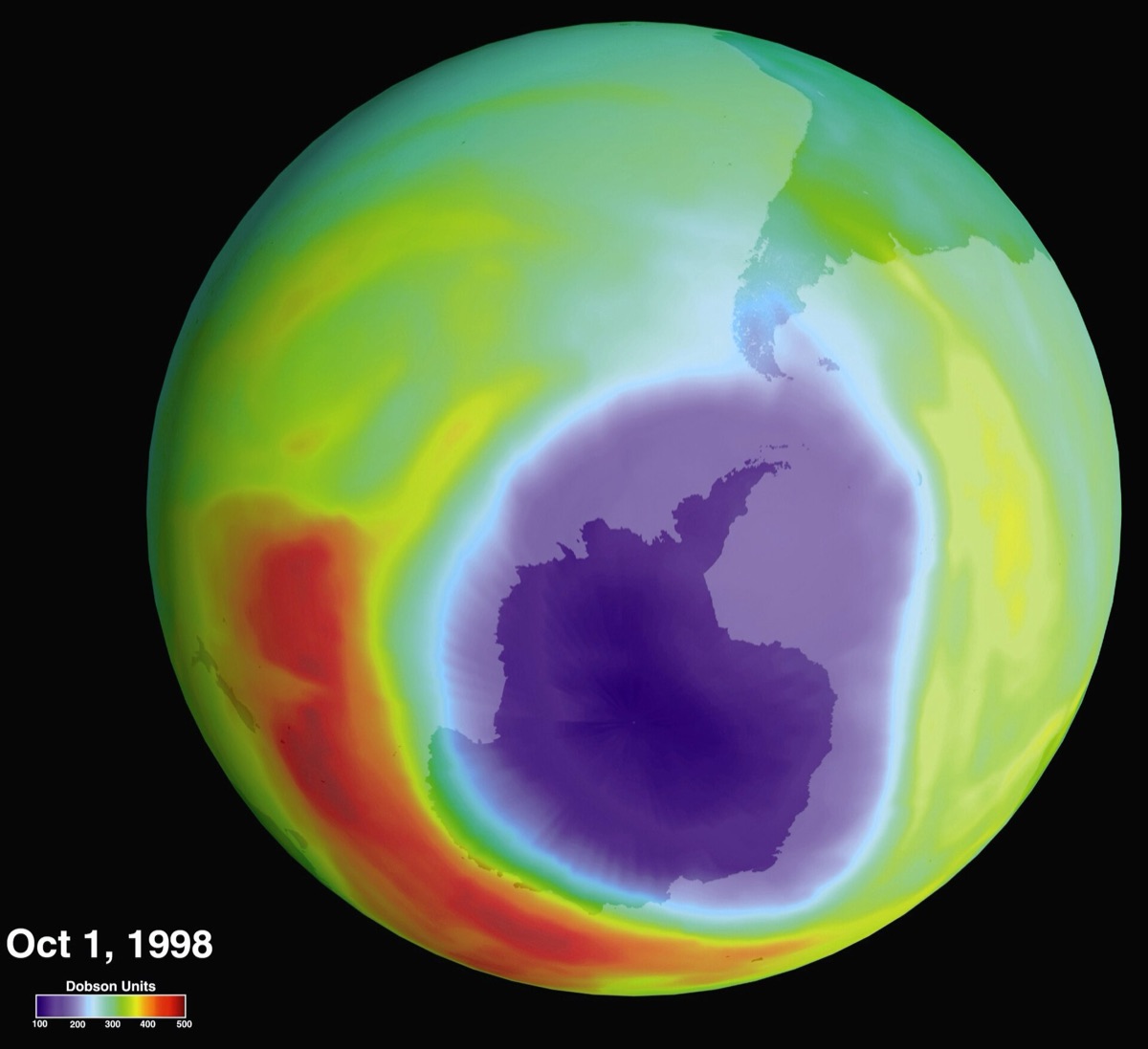
The lead came out of tailpipes and settled into the dust of every city, and into children, for half a century. The CFCs drifted up to the stratosphere, where sunlight split them and the chlorine ate the ozone layer.
- Workers poisoned making the lead additive in 1924
- CFCs are also powerful greenhouse gases
04 What he got right
Safe at home
The goal behind Freon still holds: a fridge should be safe to keep in the kitchen. Today's refrigerants are far safer than the ammonia and sulfur dioxide of the 1920s, and gentle on the ozone layer.
05 Could anyone have seen it coming?
The lead, yes. The ozone, no.
Lead poisoning had been known for centuries, and Midgley was treated for it in 1923. The chemistry that destroys ozone was first described in 1974, thirty years after he died.
Pattern #3
The problem moves
- #1Solve a shortage, create a surplus Too little becomes too much, and the extra goes somewhere.
- #2Too stable to go away Built to last, so it lasts where it shouldn't.
- → #3The problem moves Fixed in one place, it lands in another.
- #4Great for one, bad for all Each user wins. When everyone uses it, everyone loses.
- #5Chasing the wrong number It hit its target. The target was the wrong one.
- #6The cure breeds resistance Kill most of the problem and the survivors take over.
- #7The reward gets gamed People chase the incentive instead of the goal.
- #8Cheap now, paid later The bill arrives decades after the benefit.
- #9The lesson flipped Built to teach one lesson, it taught the opposite.
The first Midgley · Lifetime Achievement
Awarded to Thomas Midgley Jr.
Nominate the next one at backfireawards.com
Follow the Backfire Awards for a new backfire every week.
Oops ? · Herd ? · scores
Leaded gasoline and CFCs (Freon) Decades of lead dispersed into cities worldwide, exposing children to a neurotoxin; CFCs survived to the stratosphere and destroyed ozone.
What went right
Tetraethyl lead ended engine knock; CFCs made refrigeration stable, nonflammable and safe to have around people.
What went oops
Decades of lead dispersed into cities worldwide, exposing children to a neurotoxin; CFCs survived to the stratosphere and destroyed ozone.
Could anyone have seen it coming?
Partly knowable
The fix
The Montreal Protocol (1987) phased out CFCs and the ozone layer is slowly recovering. Leaded gasoline was phased out worldwide by 2021. Learn more
Sources
Further reading
- Half of US population exposed to adverse lead levels in early childhoodMichael J. McFarland, Matt E. Hauer and Aaron Reuben, PNAS, 2022 · Paper
- Stratospheric sink for chlorofluoromethanes: chlorine atom-catalysed destruction of ozoneMario J. Molina and F. S. Rowland, Nature, 1974 · Paper
- Something New Under the Sun: An Environmental History of the Twentieth-Century WorldJ. R. McNeill, W. W. Norton, 2000 · Book
- Thomas Midgley Jr.Wikipedia · Article
- Montreal ProtocolWikipedia · Article
Image credits
- Intersection of North Broadway and Sunset Boulevard showing traffic congestion, Los Angeles, 1922Automobile Club of Southern California, 1922. Public domain. Cropped off the print border; resized.Source
- Hole in the Ozone Layer Over AntarcticaNASA, 1998-10-01. Public domain (NASA). Resized.Source
- Portrait of Thomas Midgley Jr.Blank and Stoller, New York, Before 1944. No known copyright (Science History Institute). Resized.Source
- Atlantic Ethyl pump, Rt. 23, Leola, PennsylvaniaJohn Margolies, 1982. Public domain (Library of Congress, John Margolies Roadside America collection). Cropped off the slide mount; resized.Source