Thomas Midgley Jr. (1889 to 1944) was an American engineer and chemist at General Motors' research lab in Dayton, Ohio. In his lifetime he won the highest honor in American chemistry.
His first fix: leaded gasoline, 1921
Car engines knocked. A little tetraethyl lead stopped it. For fifty years the lead came out of tailpipes and settled into the air, the soil and children's blood.
His second fix: Freon, 1928
Home fridges ran on toxic gases. His CFCs were safe in the kitchen. Then they drifted up and thinned the ozone layer over Antarctica.
He deserved an award
So we gave him the first Midgley, in his memory. Two inventions that worked so well, and backfired so stupendously, that we are still cleaning up almost a century later.
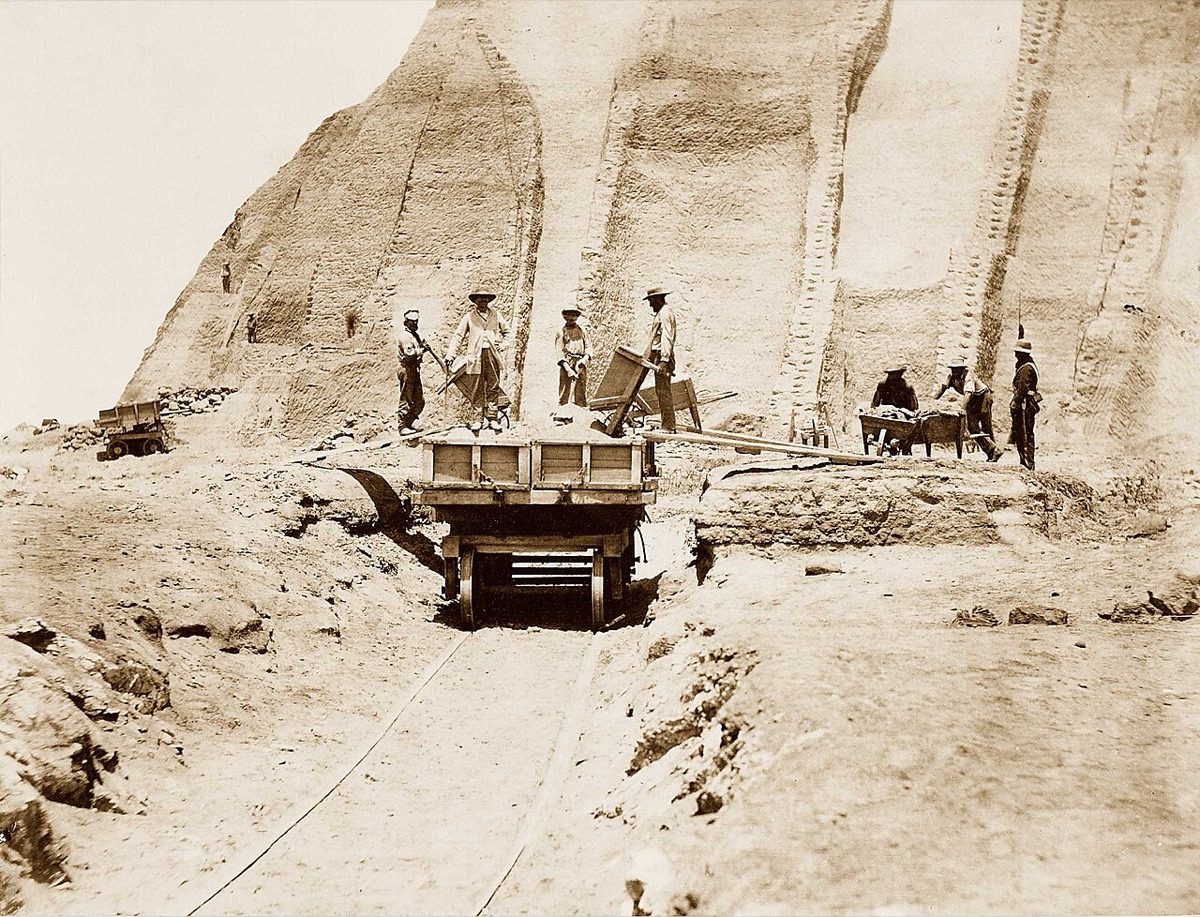
Guano mining, Chincha Islands, Peru, 1865. Henry de Witt Moulton. Public domain.
01 The bright idea
Fertilizer was running short
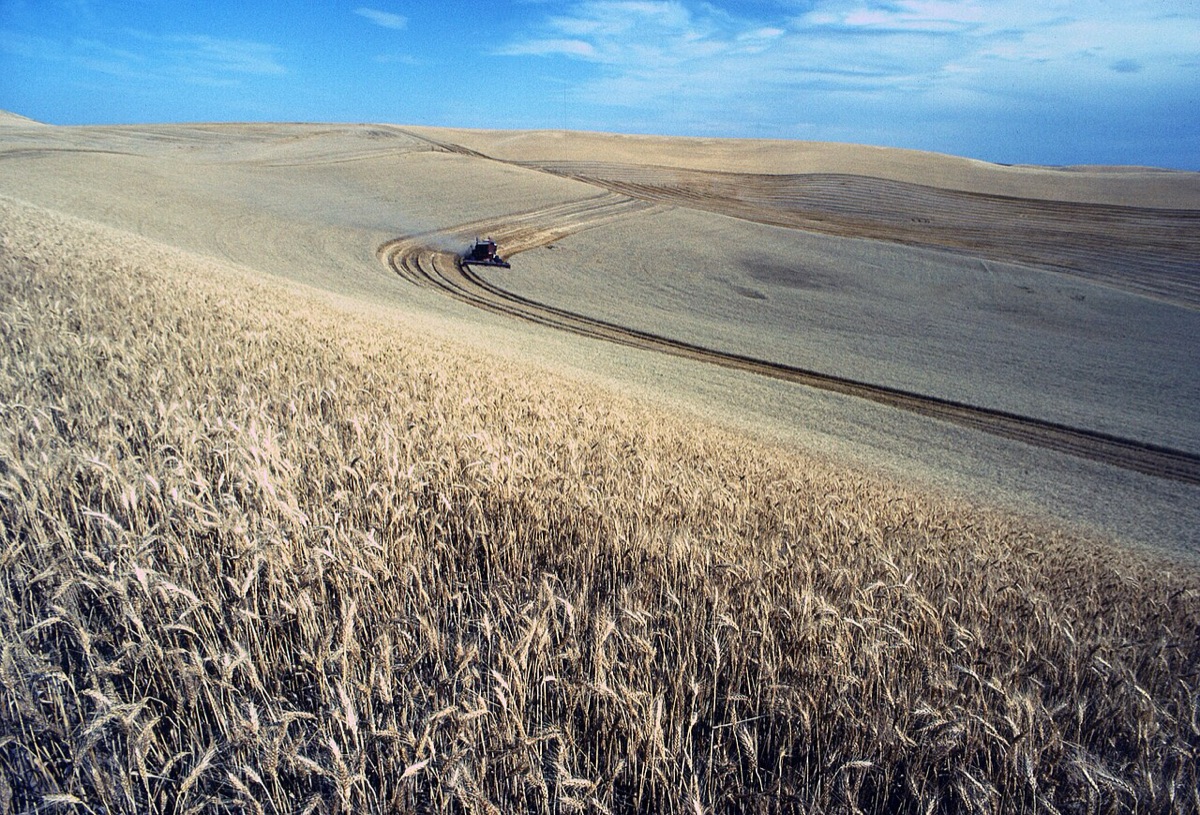
Crops need nitrogen. Around 1900 most came from bird droppings and mined saltpeter, and a chemist warned the world would run short of wheat.
Wheat harvest on the Palouse. USDA. Public domain.
02 It worked
Ammonia out of thin air
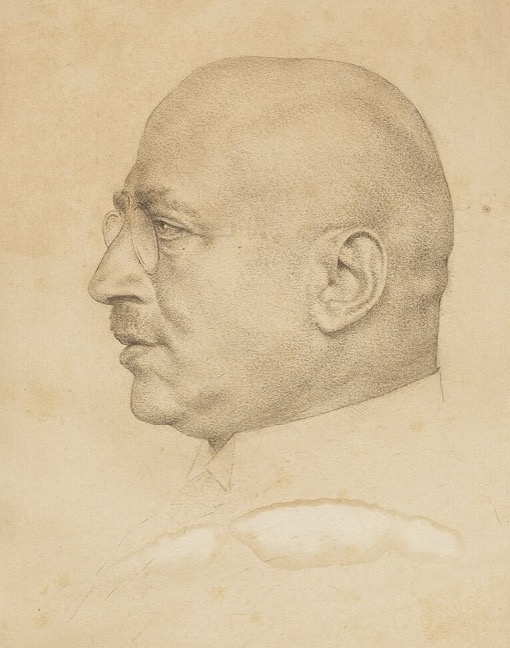
In 1909 Fritz Haber made ammonia from the nitrogen in air, and Carl Bosch scaled it up. One estimate: it fed 48% of the world in 2008.
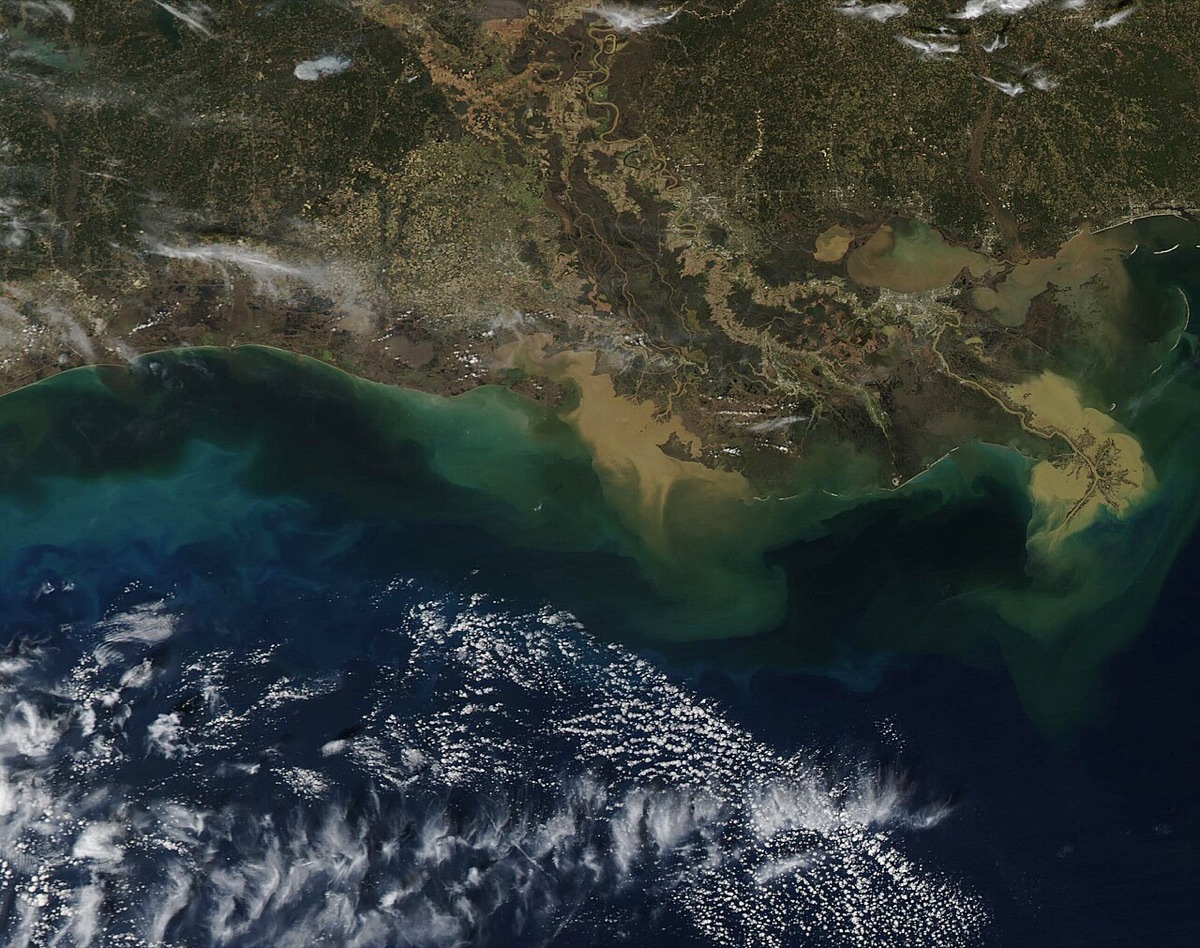
Sediment and phytoplankton in the Gulf of Mexico, 2023. NASA. Public domain.
03 The backfire
Runoff feeds a dead zone
4,402 square miles of Gulf of Mexico dead zone in summer 2025, per NOAA
The nitrogen crops don't take up washes downriver and feeds algae. Each summer the Gulf of Mexico gets a dead zone.
04 Could anyone have seen it coming?
War, yes. Rivers, no.
KnowablePartlyUnforeseeable
The harm to rivers, coasts and climate showed up once fertilizer use had grown many times over. A 2008 review says Haber could not foresee it.
05 The long cleanup
Same process, same dead zone
The process has barely changed since 1913. The Gulf dead zone still averages more than twice its 2035 target.
06 The ledger
Worth it?
It feeds about half the world, one estimate finds. The extra nitrogen ends up in rivers, sea and air.
What it gave
Food for 48% of the world's people in 2008, one estimate finds
People fed per hectare: 1.9 in 1908, 4.3 in 2008 (same study)
No more depending on mined bird droppings and saltpeter
What it cost
Nitric acid for German explosives in World War I
A Gulf of Mexico dead zone of 4,402 square miles, summer 2025 (NOAA)
Farming: 74% of human-made nitrous oxide, a greenhouse gas, in the 2010s
Pattern?
Solve a shortage, create a surplus
Once nitrogen was cheap, farms could spread more than crops take up. The shortage ended, and the surplus went downstream.
Ask before you shipIf this works better than planned, where does the extra go?
One of ten ways a good fix backfires. Learn all ten at backfireawards.com/patterns.
07 Lesson
When something gets cheap, plan for the extra
A fix for too little can quietly become a source of too much. When something gets cheap, plan for the extra.
Haber's ammonia: worth it?
💡 Yes🤦 No
Vote below, then send it to a friend who is building something.
Follow the Backfire Awards for more teardowns.
Haber's ammonia: worth it?
💡 Yes🤦 No
Answer in the comments, and send it to a friend who is building something.
Follow, like and share. Help your fellow humans avoid the lion at the watering hole.
Worth it?
Synthetic ammonia (Haber-Bosch) Explosives for Germany in World War I, fertilizer runoff, nitrous oxide emissions and a disrupted global nitrogen cycle.
What it gave
Food for 48% of the world's people in 2008, one estimate finds
People fed per hectare: 1.9 in 1908, 4.3 in 2008 (same study)
No more depending on mined bird droppings and saltpeter
What it cost
Nitric acid for German explosives in World War I
A Gulf of Mexico dead zone of 4,402 square miles, summer 2025 (NOAA)
Farming: 74% of human-made nitrous oxide, a greenhouse gas, in the 2010s
Plow erosion along a fence line, Whitman County, Washington, 1940s or 1950s. USDA. Public domain.
01 The bright idea
Kill weeds without the plow
Farmers fought weeds by plowing, which costs topsoil, time and fuel. They wanted one weed killer that left the soil alone.
Soybeans in a no-till field. Lynn Betts, USDA NRCS. Public domain.
02 It worked
One spray, over 125 kinds of weeds
In 1970 Monsanto chemist John Franz found glyphosate, sold as Roundup from 1974. It controls over 125 kinds of weeds.
Weeds in a soybean field, 2013. United Soybean Board. CC BY 2.0.
03 The backfire
The survivors took over
62 weed species in 31 countries resist glyphosate, a 2026 review finds
Global use rose almost 15-fold after 1996, when crops engineered to survive it arrived. Each spraying left behind the weeds it could not kill.
04 Could anyone have seen it coming?
Partly: the record looked clean
KnowablePartlyUnforeseeable
In 1997 Monsanto scientists found no verified resistant weeds after decades of use. But weeds had already beaten older herbicides.
05 Where it stands
Still in court, still on shelves
A WHO agency called glyphosate probably carcinogenic; US and EU regulators found it unlikely. Bayer agreed to pay up to $10.9 billion over cancer claims, admitting no liability.
06 The ledger
Worth it?
It made weeding cheaper and plowing less necessary. Leaning on it everywhere wore down what made it work.
What it gave
Control of over 125 kinds of weeds
Less plowing, saving topsoil, time and fuel
A key tool behind no-till farming
What it cost
62 weed species resistant to it, in 31 countries (2026 review)
Resistant weeds that often survive other herbicides too
Up to $10.9 billion in cancer settlements, no liability admitted (Bayer, 2020)
Pattern?
The cure breeds resistance
One weed killer on every field killed most weeds and spared the rare ones it could not. Year after year, those survivors took over.
Ask before you shipWhat survives this, and what happens when that's all that's left?
One of ten ways a good fix backfires. Learn all ten at backfireawards.com/patterns.
07 Lesson
Rotate tools before the problem learns them
The more one tool is used, the faster the problem adapts to it. Rotate tools before the problem learns them.
Roundup: worth it?
💡 Yes🤦 No
Vote below, then send it to a friend who is building something.
Follow the Backfire Awards for more teardowns.
Roundup: worth it?
💡 Yes🤦 No
Answer in the comments, and send it to a friend who is building something.
Follow, like and share. Help your fellow humans avoid the lion at the watering hole.
Worth it?
Glyphosate (Roundup) Adoption at enormous scale bred herbicide-resistant weeds and ecological concerns. The human-health debate remains contested.
What it gave
Control of over 125 kinds of weeds
Less plowing, saving topsoil, time and fuel
A key tool behind no-till farming
What it cost
62 weed species resistant to it, in 31 countries (2026 review)
Resistant weeds that often survive other herbicides too
Up to $10.9 billion in cancer settlements, no liability admitted (Bayer, 2020)
In 1864 a blast at Alfred Nobel's factory killed five people, his brother among them. He set out to make nitroglycerin safe to handle.
Mixing dynamite at Nobel's Ardeer factory, Scotland, 1897. Scott Photo, Ardrossan. Public domain.
02 It worked
Nitroglycerin, soaked into earth
Patented in 1867, dynamite was nitroglycerin soaked into porous earth, quite safe to handle. One plant made 11 tons that year and 3,150 in 1874.
The dynamite explosions at the Houses of Parliament, The Graphic, 1885. Henry William Brewer. Public domain.
03 The backfire
Easy to carry, for anyone
A stable explosive can be carried into a city and left behind. In 1885 bombers used it on the House of Commons.
04 Could anyone have seen it coming?
Yes: armies used it by 1870
KnowablePartlyUnforeseeable
Both armies used dynamite in the Franco-Prussian War, three years after the patent. Its uses for war and terror were plain in his lifetime.
05 What came next
Powder for armies
Nobel went on to patent ballistite in 1887, a nearly smokeless powder Italy's army adopted. In 1894 he bought the ironworks that became Bofors arms.
06 The ledger
Worth it?
Dynamite helped build the Gotthard tunnel, cutting Lucerne to Milan from 27 hours to about 5.5. It also put a portable bomb in anyone's hands.
What it gave
One plant's output: 11 tons in 1867, 3,150 tons in 1874
Lucerne to Milan in about 5.5 hours instead of 27, via the Gotthard tunnel (1882)
Far less risk of accidental explosion than liquid nitroglycerin
What it cost
A bombing campaign in Britain, 1881 to 1885
Dynamite used by both armies in the Franco-Prussian War
Ballistite, a smokeless military powder adopted by Italy's army
Pattern?
The problem moves
Nitroglycerin's danger was going off when nobody meant it to. Dynamite fixed that, so the risk moved to whoever held the stick.
Ask before you shipWho isn't at the table who will feel this?
One of ten ways a good fix backfires. Learn all ten at backfireawards.com/patterns.
07 Lesson
Safe to handle means easy to use, by anyone
A fix aimed at accidents does nothing about intent. Safe to handle means easy to use, by anyone.
Dynamite: worth it?
💡 Yes🤦 No
Vote below, then send it to a friend who is building something.
Follow the Backfire Awards for more teardowns.
Dynamite: worth it?
💡 Yes🤦 No
Answer in the comments, and send it to a friend who is building something.
Follow, like and share. Help your fellow humans avoid the lion at the watering hole.
Worth it?
Dynamite Armies used it within three years, in the Franco-Prussian War, and bombers made it a weapon of terror, as in the Fenian campaign in Britain, 1881 to 1885. In war it was soon overtaken by smokeless powders, including Nobel's own ballistite, and by TNT.
What it gave
One plant's output: 11 tons in 1867, 3,150 tons in 1874
Lucerne to Milan in about 5.5 hours instead of 27, via the Gotthard tunnel (1882)
Far less risk of accidental explosion than liquid nitroglycerin
What it cost
A bombing campaign in Britain, 1881 to 1885
Dynamite used by both armies in the Franco-Prussian War
Ballistite, a smokeless military powder adopted by Italy's army
Norman Borlaug 1914 to 2009 Ecology and Agriculture
India's harvest miracle is draining its wells
Norman Borlaug, Mexico, Pakistan and India, 1960s.
Swipe →
Wheat flattened by rain and wind, 2013. Azizkhan327. CC BY-SA 3.0.
01 The bright idea
Wheat that snapped
Around 1960, West Pakistan fell short of wheat every year, and tall wheat snapped when fed more fertilizer. Norman Borlaug's team set out to breed shorter wheat.
Ripe wheat in Punjab, 2019. Harvinder Chandigarh. CC BY-SA 4.0.
02 It worked
Short wheat, big harvests
The dwarf wheat took two or three times the fertilizer and lifted top yields over 70 percent. In 1968 India harvested a record 17 million tons.
Tube well in Mansa district, Punjab, India, 2012. Tari Buttar. CC0.
03 The backfire
Wells that keep getting deeper
109 km³ of groundwater lost in northwest India, 2002 to 2008, one study found
The seeds paid off with water, and Punjab filled with thirsty rice and wheat. Farmers now drill 200 to 300 feet for water.
04 Could anyone have seen it coming?
His worry was people, not water
KnowablePartlyUnforeseeable
Punjab's water table was falling 18 cm a year by the mid-1980s. Borlaug's own 1970 warning was about population, not water.
05 The long cleanup
Still pumping more than it rains
In 2010 Punjab pumped 45 percent more groundwater each year than rain put back. The water bill is still arriving.
06 The ledger
Worth it?
It gave cereal harvests that tripled across the developing world in 50 years. It cost wells that keep getting deeper.
What it gave
Developing-world cereal harvests tripled in 50 years on 30 percent more land (PNAS, 2012)
India's record wheat crop of 17 million tons in 1968
Mexico self-supporting in wheat by 1956
What it cost
109 cubic kilometers of groundwater lost in northwest India, 2002 to 2008 (Nature, 2009)
Punjab pumping 45 percent more groundwater than rain puts back (Columbia Water Center, 2010)
Water use, soil damage and chemical runoff (PNAS, 2012)
Pattern?
Cheap now, paid later
The harvest pays every season, and flat-fee power made pumping more cost nothing extra. The aquifer bill comes due over decades.
Ask before you shipWhat does this cost in twenty years, and who pays then?
One of ten ways a good fix backfires. Learn all ten at backfireawards.com/patterns.
07 Lesson
Price the resource your tool depends on
A review found the damage came less from the seeds than from policies that made water cheap to overuse. Price the resource your tool depends on.
Dwarf wheat: worth it?
💡 Yes🤦 No
Vote below, then send it to a friend who is building something.
Follow the Backfire Awards for more teardowns.
Dwarf wheat: worth it?
💡 Yes🤦 No
Answer in the comments, and send it to a friend who is building something.
Follow, like and share. Help your fellow humans avoid the lion at the watering hole.
Worth it?
The Green Revolution Monocultures, groundwater depletion, fertilizer pollution and heavy dependence on industrial inputs.
What it gave
Developing-world cereal harvests tripled in 50 years on 30 percent more land (PNAS, 2012)
India's record wheat crop of 17 million tons in 1968
Mexico self-supporting in wheat by 1956
What it cost
109 cubic kilometers of groundwater lost in northwest India, 2002 to 2008 (Nature, 2009)
Punjab pumping 45 percent more groundwater than rain puts back (Columbia Water Center, 2010)
Water use, soil damage and chemical runoff (PNAS, 2012)
Early Facebook meant visiting friends' profiles one by one. In 2006 News Feed gathered their updates in one place.
02 It worked
A billion people a month
Users protested at first, then stayed. By 2012 more than a billion people used Facebook monthly.
03 The backfire
Comments, or arguments
30 to 1 points for a significant comment vs. a like, Facebook's 2018 scoring
In 2018, citing well-being, Facebook began ranking posts by the comments they sparked. Its researchers found publishers and parties tilting posts toward outrage.
04 Could anyone have seen it coming?
Yes, inside Facebook by 2019
Still contested
Facebook's own researchers flagged the effect by 2019. Outside researchers still argue over how much it mattered.
05 The cleanup
Turning down the dial
In September 2020 Facebook cut the angry reaction's weight to zero. From 2021 it gave political comments and shares less weight.
06 The ledger
Worth it?
The feed keeps billions of people in touch. By its makers' own research, it also favored outrage.
What it gave
3.6 billion people a day on Meta's apps, June 2026
Friends' news in one place, free, since 2006
More than a billion monthly users by October 2012
What it cost
Publishers and parties tilting posts toward outrage, Facebook's researchers found (WSJ, 2021)
An angry reaction once counted five times a like (Washington Post, 2021)
More uncivil posts in the ranked feed than a plain timeline (Science, 2023)
Pattern?
Chasing the wrong number
Facebook counted comments as a sign of meaningful talk. But a fight earns comments too, so the count rose either way.
Ask before you shipIf this number goes up and nothing else changes, are we better off?
One of ten ways a good fix backfires. Learn all ten at backfireawards.com/patterns.
07 Lesson
Ask what else moves your number
A count of replies can't tell a good talk from a fight. Ask what else moves your number.
Facebook's feed: worth it?
💡 Yes🤦 No
Vote below, then send it to a friend who is building something.
Follow the Backfire Awards for more teardowns.
Facebook's feed: worth it?
💡 Yes🤦 No
Answer in the comments, and send it to a friend who is building something.
Follow, like and share. Help your fellow humans avoid the lion at the watering hole.
Worth it?
Facebook's engagement-ranked News Feed Misinformation, polarization, privacy loss, addictive engagement and algorithmic amplification. Causality is heavily researched but still debated.
What it gave
3.6 billion people a day on Meta's apps, June 2026
Friends' news in one place, free, since 2006
More than a billion monthly users by October 2012
What it cost
Publishers and parties tilting posts toward outrage, Facebook's researchers found (WSJ, 2021)
An angry reaction once counted five times a like (Washington Post, 2021)
More uncivil posts in the ranked feed than a plain timeline (Science, 2023)
Edward M. Bassett 1863 to 1948 Cities and Transport
Zoning kept out factories. Then apartments.
Edward M. Bassett, New York, 1916.
Swipe →
Equitable Building, New York City, 1915. Library of Congress. Public domain.
01 The bright idea
A shadow over Broadway
Manhattan's tenements lacked light and air, and in 1915 the Equitable Building cast a seven-acre shadow. Edward M. Bassett set out to bring the light back.
Study of the largest building the 1916 zoning law allowed, 1922. Hugh Ferriss. Cooper Hewitt. Public domain.
02 It worked
America's first zoning code
His commission wrote the first comprehensive US zoning code in 1916, capping heights and keeping factories out of residential districts. By 1923, 218 municipalities had zoning.
03 The backfire
Homes far from everything
1.5 million homes the US was short in 2022, by a Moody's estimate
As zoning spread, later codes barred apartments from home districts and kept homes far from jobs. The rules that kept out factories kept out homes.
04 Could anyone have seen it coming?
A judge warned. The cars came later.
KnowablePartlyUnforeseeable
Striking down a zoning law, a federal judge wrote that it would "segregate them according to their income." He warned in 1924 and was overruled in 1926.
05 The long cleanup
Undoing it takes new law
In 2019 Oregon required cities over 10,000 people to allow duplexes on single-family land. Undoing local codes took a state law.
06 The ledger
Worth it?
It gave crowded streets light and air and kept factories away from homes. It cost neighborhoods where jobs and shops need a car.
What it gave
Light and air under towers like the Equitable
Homes kept apart from factories
Zoning in 218 municipalities with over 22 million people by 1923
What it cost
A shortfall of more than 1.5 million homes, by one 2022 estimate
Homes, jobs and shops set apart, so people rely on cars (EPA, 2001)
Apartments barred from home districts; Oregon needed a 2019 law to allow duplexes
Pattern?
Cheap now, paid later
In 1916 the light and air arrived at once. The cost grew as cities spread out under the rules.
Ask before you shipWhat does this cost in twenty years, and who pays then?
One of ten ways a good fix backfires. Learn all ten at backfireawards.com/patterns.
07 Lesson
Give every rule a date to check it again
A rule written for one city's problem becomes a template for places that never had it. Give every rule a date to check it again.
Zoning: worth it?
💡 Yes🤦 No
Vote below, then send it to a friend who is building something.
Follow the Backfire Awards for more teardowns.
Zoning: worth it?
💡 Yes🤦 No
Answer in the comments, and send it to a friend who is building something.
Follow, like and share. Help your fellow humans avoid the lion at the watering hole.
Worth it?
New York's 1916 zoning code As zoning spread, later codes went further than New York's, barring apartments from whole districts and keeping homes, jobs and shops apart. The results include car dependence and a housing shortage that is now hard to legislate away.
What it gave
Light and air under towers like the Equitable
Homes kept apart from factories
Zoning in 218 municipalities with over 22 million people by 1923
What it cost
A shortfall of more than 1.5 million homes, by one 2022 estimate
Homes, jobs and shops set apart, so people rely on cars (EPA, 2001)
Apartments barred from home districts; Oregon needed a 2019 law to allow duplexes
Henry George, about 1886. Unknown photographer. New York Public Library. Public domain.
01 The bright idea
A lesson you could play
Lizzie Magie followed Henry George, who argued that rent enriches landowners and keeps tenants poor. She built a board game to show it.
The Landlord's Game, US patent 748,626, 1904. Lizzie J. Magie. Public domain.
02 It worked
Patented and passed around
She patented it on January 5, 1904, and players drew their own boards. A Wharton economist taught with it in class.
03 The backfire
Sold as Monopoly, played to win
275 million Monopoly sets sold worldwide, Hasbro said in 2015
In 1935 Parker Brothers began selling a version called Monopoly. Its object: become the wealthiest player. The warning became the goal.
04 Could anyone have seen it coming?
Her own rules pointed the way
KnowablePartlyUnforeseeable
Her 1904 patent made getting rich the object, and the lesson relied on players noticing the cost. A store version without the argument was harder to foresee.
05 The long cleanup
Her name came back
Parker Brothers paid her $500 for a revised patent in 1935, and by 1936 she was largely forgotten. Research for a 1970s lawsuit brought her patents back.
06 The ledger
Worth it?
It gave a board families still play, with 275 million sets sold by Hasbro's count. It cost the lesson it was built to teach.
What it gave
275 million Monopoly sets sold, Hasbro said in 2015
A board still in use, with a jail and a corner to start from (US patent 748,626)
A game economics teachers used in class
What it cost
A game against land monopoly, best known for winning one
$500 for her patent, and decades without credit
Her anti-monopolist rules, largely forgotten by 1936
Pattern?
The lesson flipped
To show the harm of land-grabbing, the game made land-grabbing the way to win. Players practiced it, and the warning did not come in the box.
Ask before you shipCould the audience take the opposite message from this?
One of ten ways a good fix backfires. Learn all ten at backfireawards.com/patterns.
07 Lesson
Put the lesson in the rules
People learn what they practice, not what they are told it means. Put the lesson in the rules.
Magie's game: worth it?
💡 Yes🤦 No
Vote below, then send it to a friend who is building something.
Follow the Backfire Awards for more teardowns.
Magie's game: worth it?
💡 Yes🤦 No
Answer in the comments, and send it to a friend who is building something.
Follow, like and share. Help your fellow humans avoid the lion at the watering hole.
Worth it?
The Landlord's Game (which became Monopoly) In 1935 Parker Brothers sold a version as Monopoly, where you win by bankrupting everyone else. It became one of the best-selling board games of all time, and it taught the opposite lesson.
What it gave
275 million Monopoly sets sold, Hasbro said in 2015
A board still in use, with a jail and a corner to start from (US patent 748,626)
A game economics teachers used in class
What it cost
A game against land monopoly, best known for winning one
$500 for her patent, and decades without credit
Her anti-monopolist rules, largely forgotten by 1936
Ferdinand Silcox 1882 to 1939 Policy and Incentives
Put out every forest fire, get bigger ones
Ferdinand Silcox, US Forest Service, 1935 to 1978.
Swipe →
Burned site on Big Creek, St. Joe National Forest, Idaho, 1910. J.B. Halm, US Forest Service. Public domain.
01 The bright idea
No more fires like 1910
In 1910 fires burned more than 3 million acres and killed at least 85 people. Ferdinand Silcox argued fire could be kept out.
02 It worked
Out by 10 a.m.
In 1935 Silcox, now chief, ordered every fire controlled by 10 a.m. the next morning. Yearly acres burned on western national forests fell from 455,340 to 141,975.
The Dixie Fire, California, August 4, 2021, seen by Landsat 7. NASA Earth Observatory. Public domain.
03 The backfire
The fuel stayed
3.0M to 7.1M US acres burned a year, 1985 to 1994 vs. 2016 to 2025 (NIFC)
Small fires had kept dry pine forests open. Without them, fuel piled up for bigger, hotter fires. Climate and building near forests add to it.
04 Could anyone have seen it coming?
Partly: a warning came in 1943
KnowablePartlyUnforeseeable
In 1943 Harold Weaver warned that keeping all fire out was harming pine forests. How much fuel would pile up took decades to show.
Prescribed burn in ponderosa pine, Grand Canyon National Park, December 11, 2024. National Park Service. Public domain.
05 The long cleanup
Putting fire back
The Forest Service dropped the rule in 1978. Now it burns and thins forests on purpose. A 2022 plan targets up to 20 million more acres.
06 The ledger
Worth it?
It stopped the fires of its day. It also stored their fuel for bigger fires later.
What it gave
Western national forest acres burned a year: 455,340 (1926 to 1934) to 141,975 (1935 to 1943) (Loveridge, 1944)
No long-running blowup fire on western national forests, 1935 to 1944, the agency reported
Area burned a fraction of its historical extent by the 1950s and 1960s (US Forest Service)
What it cost
Dry pine stands of 40 to 60 trees an acre grown to hundreds in many places (US Forest Service)
US acres burned a year: 3.0 million (1985 to 1994) to 7.1 million (2016 to 2025), with climate and building also at work (NIFC)
Fire took 52% of the Forest Service budget in 2015, up from 16% in 1995 (USDA)
Pattern?
The risk piles up
Every small fire put out left its fuel standing. So the few that escaped burned through decades of stored fuel.
Ask before you shipWhat small failures are we preventing, and what were they releasing?
One of ten ways a good fix backfires. Learn all ten at backfireawards.com/patterns.
07 Lesson
Ask what the small failures were clearing
Small failures can be doing a job nobody wrote down. Ask what the small failures were clearing.
The 10 a.m. rule: worth it?
💡 Yes🤦 No
Vote below, then send it to a friend who is building something.
Follow the Backfire Awards for more teardowns.
The 10 a.m. rule: worth it?
💡 Yes🤦 No
Answer in the comments, and send it to a friend who is building something.
Follow, like and share. Help your fellow humans avoid the lion at the watering hole.
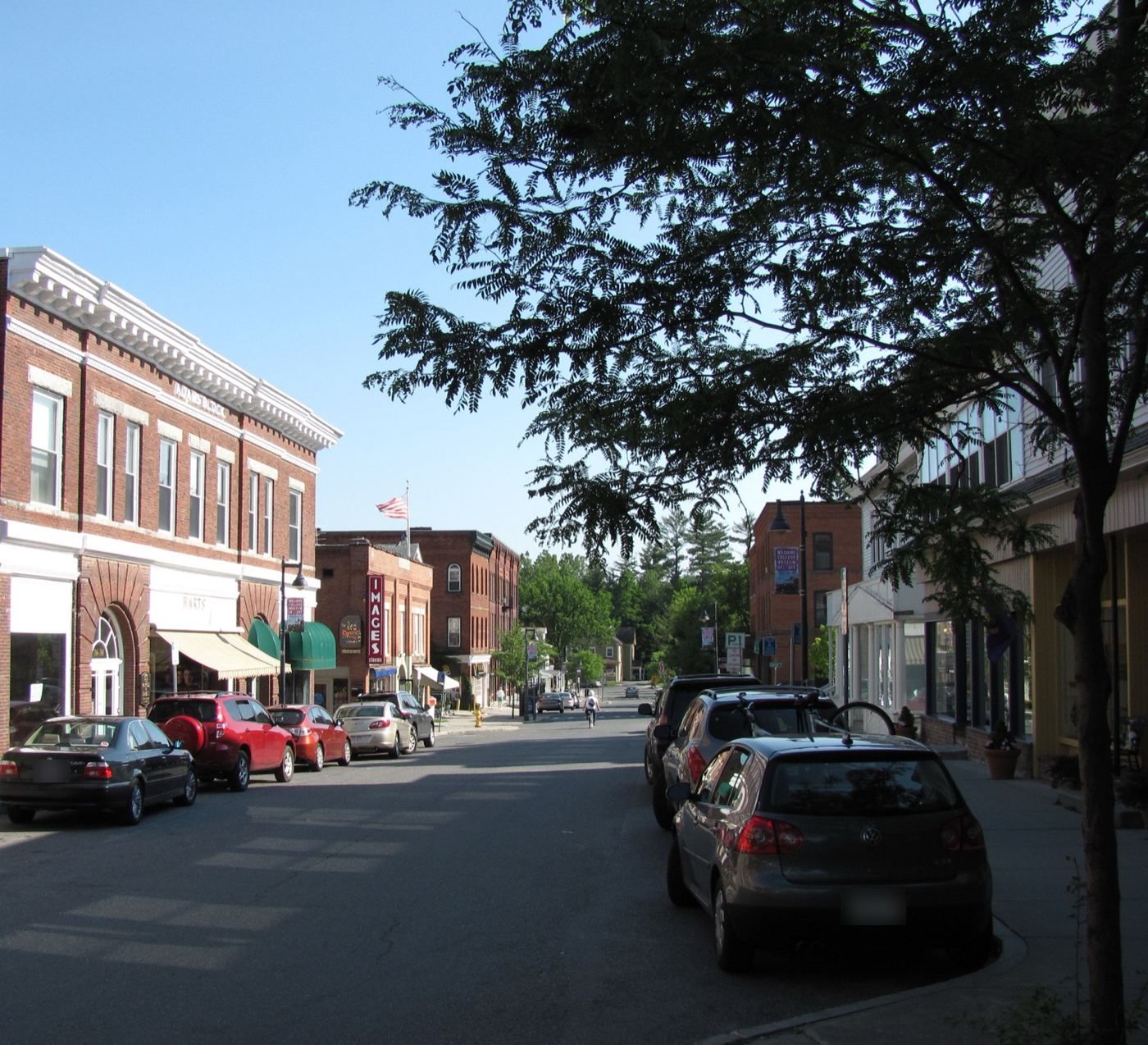
Spring Street, Williamstown, Massachusetts, 2010. John Phelan. CC BY 3.0.
01 The bright idea
Free pages, paid by ads
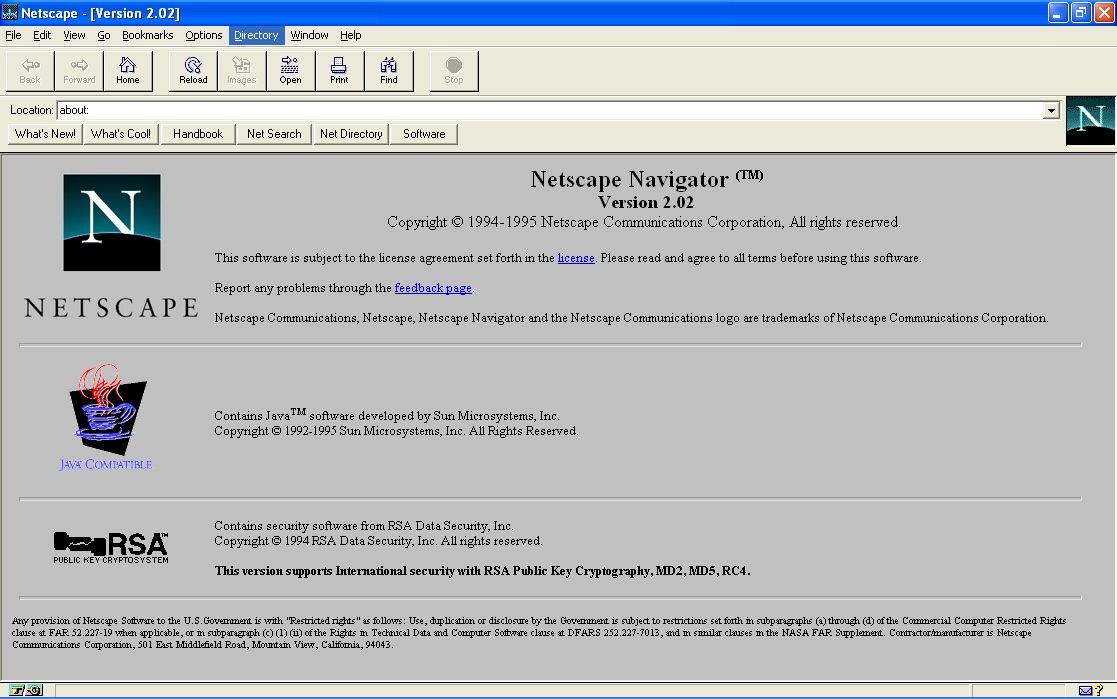
A carmaker complained when its banner ran on a Tripod member's page about sex. Ethan Zuckerman's fix: open the ad in its own window.
Netscape Navigator 2.02, screenshot by Indolering, 2015. CC0.
02 It worked
A window of its own
The ad sat beside the page, not on it, and others copied the trick. Advertisers bought 11.3 billion pop-ups from January to July 2002, Nielsen//NetRatings counted.
03 The backfire
Everyone shut the window
78% of 2,667 web users called pop-ups very annoying (GartnerG2, 2002)
Browser makers built in an off switch. Phoenix, later Firefox, blocked pop-ups from its first release in 2002. Netscape and Safari followed within months.
04 Could anyone have seen it coming?
Partly: users already found them annoying
KnowablePartlyUnforeseeable
In a 1999 survey, 69% of users found pop-ups annoying. A web where every site used them was harder to see.
05 The long cleanup
Still closing windows
Internet Explorer blocked pop-ups by default from 2004. In 2018 Chrome began stripping ads from sites that break ad standards, pop-ups included.
06 The ledger
Worth it?
It solved one advertiser's problem. It handed the cost to every reader on the web.
What it gave
Ads sold on members' pages without setting a brand beside the content (Zuckerman, 2014)
Free homepages; about 15 million people a day viewed Tripod pages by 1999 (Zuckerman)
11.3 billion pop-up impressions bought, January to July 2002 (Nielsen//NetRatings)
What it cost
78% of internet users surveyed called pop-ups very annoying, 2002 (GartnerG2)
Pop-up blocking built into Firefox, Netscape, Safari and Internet Explorer by 2004
$21.8 billion in ad revenue blocked worldwide in 2015 by ad blockers of every kind, one estimate (PageFair and Adobe)
Pattern?
Great for one, bad for all
One pop-up gets noticed. When thousands of sites use them, readers switch them off, and browsers switch them off for everyone.
Ask before you shipWhat happens when everyone does this, not just us?
One of ten ways a good fix backfires. Learn all ten at backfireawards.com/patterns.
07 Lesson
A trick for one fails when everyone copies it
Attention is shared by every site that asks for it. A trick for one fails when everyone copies it.
The pop-up: worth it?
💡 Yes🤦 No
Vote below, then send it to a friend who is building something.
Follow the Backfire Awards for more teardowns.
The pop-up: worth it?
💡 Yes🤦 No
Answer in the comments, and send it to a friend who is building something.
Follow, like and share. Help your fellow humans avoid the lion at the watering hole.
Worth it?
The pop-up ad at Tripod.com Pop-ups became one of the most hated ad formats. Browsers built in blockers from 2002 (Phoenix, later Firefox) to 2004 (Internet Explorer), and readers went on to block ads of every kind. Zuckerman later called advertising, the model the pop-up served, the original sin of the web.
What it gave
Ads sold on members' pages without setting a brand beside the content (Zuckerman, 2014)
Free homepages; about 15 million people a day viewed Tripod pages by 1999 (Zuckerman)
11.3 billion pop-up impressions bought, January to July 2002 (Nielsen//NetRatings)
What it cost
78% of internet users surveyed called pop-ups very annoying, 2002 (GartnerG2)
Pop-up blocking built into Firefox, Netscape, Safari and Internet Explorer by 2004
$21.8 billion in ad revenue blocked worldwide in 2015 by ad blockers of every kind, one estimate (PageFair and Adobe)
Sten Gustaf Thulin 1914 to 2006 Chemistry and Materials
The plastic bag: built to last, used once
Sten Gustaf Thulin, Celloplast, Sweden, 1960s.
Swipe →
Bag with handle of weldable plastic material, US patent 3,180,557, filed 1962, granted 1965. Sten Gustaf Thulin. Public domain.
01 The bright idea
A bag that won't give out
Groceries went home in paper bags. A Swedish team welded a strong bag from one plastic tube. The patent named Sten Gustaf Thulin.
Plastic shopping bags, 2011. Phrontis. CC BY-SA 3.0.
02 It worked
A penny a bag
Rainproof and strong, it caught on. By 2007 it cost about a penny, paper 4 to 5 cents, industry figures said.
Plastic bag litter on the Jukskei River, Johannesburg, 2008. NJR ZA. CC BY-SA 3.0.
03 The backfire
Free, so thrown away
328 bags a person a year in Ireland before 2002, a government estimate
Handed out free, bags were used once and tossed. They snagged in trees, blocked drains and drifted out to sea.
Ocean sunfish, which feed mainly on jellyfish and can mistake bags for them, Greater Farallones, 2015. NOAA National Marine Sanctuaries. Public domain.
04 Could anyone have seen it coming?
Partly: the litter was easy to see
KnowablePartlyUnforeseeable
Litter was easy to see, and in 1972 scientists reported plastic in the open Atlantic. In 1986 Barry Commoner asked if society really needed plastic bags.
05 The long cleanup
A small price, a big drop
Ireland's 15 cent levy in 2002 cut use from about 328 bags a person to 21. By 2018, 127 of 192 countries regulated plastic bags.
06 The ledger
Worth it?
It carried the world's shopping for about a penny a bag. Given away free, it ended up in trees, drains and the sea.
What it gave
A strong, waterproof bag for about a penny, against 4 to 5 cents for paper (industry figures, 2007)
Lower climate impact than a paper bag used fewer than 3 times (UK Environment Agency, 2011)
90% of US grocery bags by 2007, an industry group said
What it cost
About 5% of Ireland's litter before its 2002 levy (Irish government)
Drains and waterways blocked in Bangladesh, which banned thin bags in 2002
42 billion lightweight bags used in the EU in 2018, about 95 a person (Eurostat)
Pattern?
Great for one, bad for all
For each shopper and store, a free bag is the sensible choice. The cost lands on streets and seas everyone shares.
Ask before you shipWhat happens when everyone does this, not just us?
One of ten ways a good fix backfires. Learn all ten at backfireawards.com/patterns.
07 Lesson
A small price can change the total
Something built to be reused tends to be used once when it is free. A small price can change the total.
The plastic bag: worth it?
💡 Yes🤦 No
Vote below, then send it to a friend who is building something.
Follow the Backfire Awards for more teardowns.
The plastic bag: worth it?
💡 Yes🤦 No
Answer in the comments, and send it to a friend who is building something.
Follow, like and share. Help your fellow humans avoid the lion at the watering hole.
Worth it?
The one-piece plastic shopping bag (Celloplast, patented 1965) Handed out free, it was used once and thrown away by the billions. Bags became a familiar part of litter, blocked drains and reached the sea, and by 2018, 127 of 192 countries regulated them.
What it gave
A strong, waterproof bag for about a penny, against 4 to 5 cents for paper (industry figures, 2007)
Lower climate impact than a paper bag used fewer than 3 times (UK Environment Agency, 2011)
90% of US grocery bags by 2007, an industry group said
What it cost
About 5% of Ireland's litter before its 2002 levy (Irish government)
Drains and waterways blocked in Bangladesh, which banned thin bags in 2002
42 billion lightweight bags used in the EU in 2018, about 95 a person (Eurostat)
One short email a week: a new backfire teardown, the pattern behind it, and who won. Unsubscribe any time.
Know a fix that backfired?
Get the Backfire Newsletter and reply to any issue with your suggestion: what it fixed, and what it broke. We read every reply and tear down the best ones.